The layered histories, hidden journeys, and forgotten stories behind the jewels that appeared on the Met steps this year, from mine to museum, from Paris salons to Nazi occupation, from Beyoncé’s diamond-studded neckline to Anne Hathaway’s sculptural gold laurel-esque necklace.
Every jewel on the Met Gala red carpet has a biography. Most of those biographies go unread.
At the ‘Costume Art’-themed 2026 Met Gala, where couture transcends into art, a few jewels felt less like accessories and more like quiet declarations of identity, of memory, of a lineage that stretches across places and history. These weren’t just objects worn for spectacle. They carried stories that didn’t fit neatly into one geography or one narrative.
I was curious to learn where, specifically, these extraordinary heirlooms came from: the countries, the ateliers, the auction rooms, and just how they came to be. Some of these histories are joyful. Some are harrowing. All of them deserve to be heard. This series captures some of them.
The Stone that is 1,000 Times Rarer than a Diamond
Long before there was a Tanzania, or a Kilimanjaro, or a human being to look up at a mountain and wonder, the stone that would one day hang at Sudha Reddy’s throat was forming in the earth.
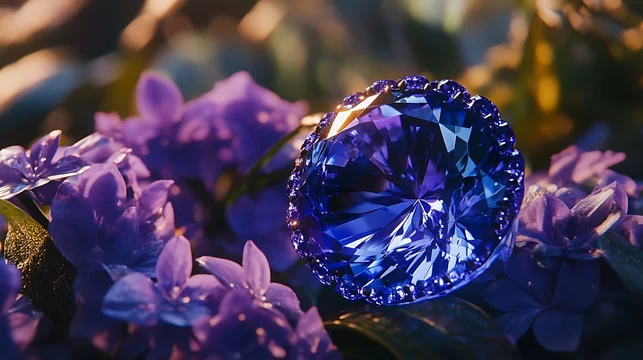
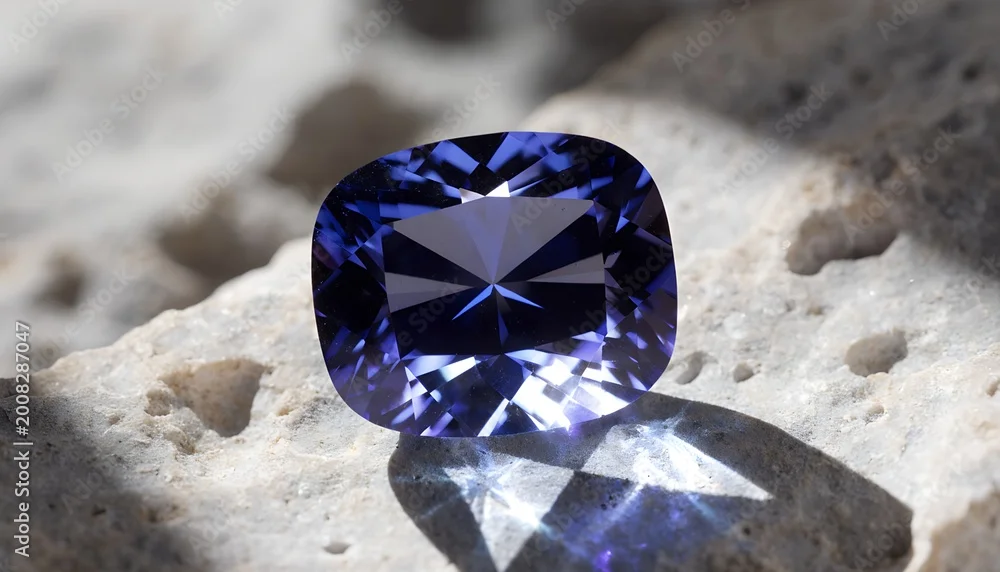
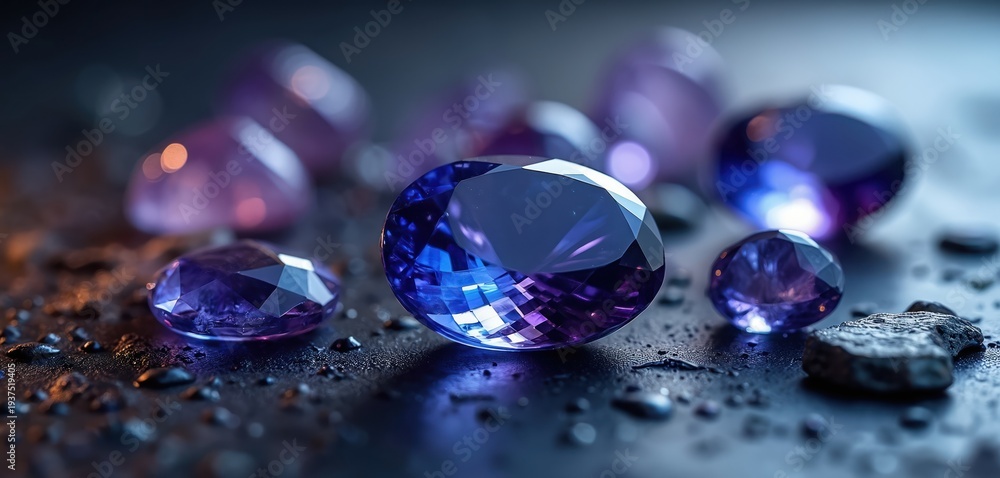
Its creation began approximately 585 million years ago, during a period geologists call the Ediacaran, when massive tectonic plates collided beneath what would become East Africa. The intense heat and pressure of that collision forced calcium, aluminum, and traces of vanadium into a crystalline lattice — a mineral called zoisite — and the vanadium gave it something extraordinary: a color that shifts between deep blue and rich violet depending on how the light hits it, unlike any other gem on earth.
Long before Vedic astrologers associated it with Saturn, the planet of karma and wisdom, for the Maasai of Tanzania, blue is a sacred colour representing the heavens and a direct line between earth and the divine. Tanzanite, born from lightning striking the Merelani Hills, was seen as a gift from that sky. It was given to women after childbirth — a blessing for new life and new beginnings. It is thought in Vedic tradition to open the upper chakras and sharpen intuition.
The Energy of Tanzanite
I was talked into buying my first Tanzanite in a ring, with the line that it is a “one-generation gemstone”, meaning due to its single-source origin. It is found in only one place on the planet: a narrow mining zone at the foot of Mount Kilimanjaro, in the Merelani Hills of Tanzania’s Manyara Region. The mining area is roughly twice the length and width of Central Park. All the tanzanite that has ever existed, or will ever exist, comes from there.
The Geology
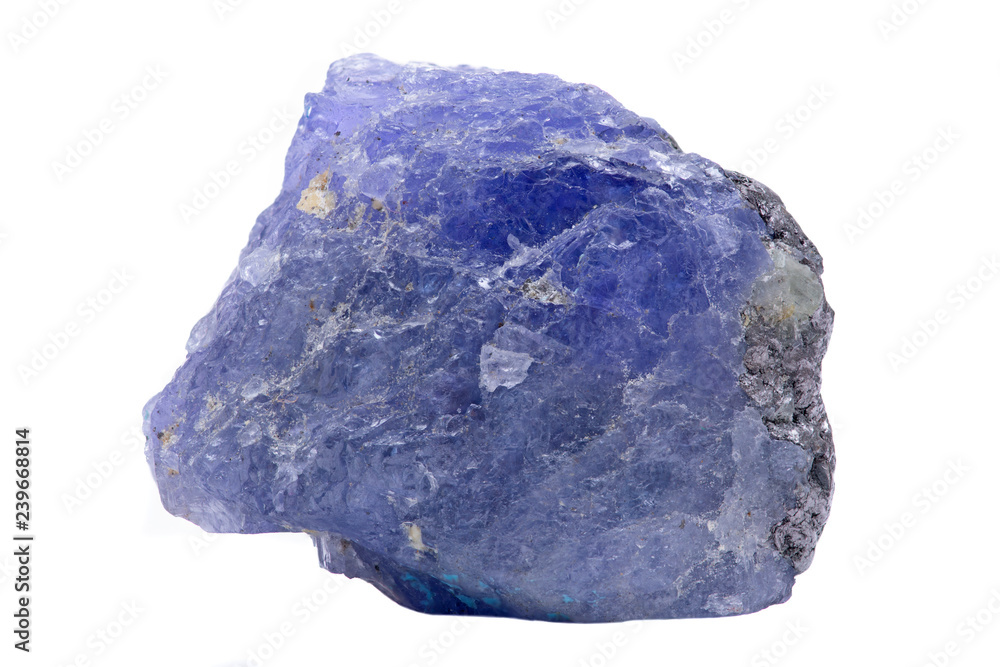
In its rough state, tanzanite is an unremarkable reddish-brown. It is only when heated to around 600°C that the stone undergoes a color transformation, its “veil” lifted to reveal the deep blue-violet beneath. Every tanzanite you have ever seen in jewelry has been through this process — an alchemical transformation known only to this one mineral, from this one place.
Its creation began approximately 585 million years ago, during a period geologists call the Ediacaran, when massive tectonic plates collided beneath what would become East Africa. The intense heat and pressure of that collision forced calcium, aluminum, and traces of vanadium into a crystalline lattice — a mineral called zoisite — and the vanadium gave it something extraordinary: a color that shifts between deep blue and rich violet depending on how the light hits it, unlike any other gem on earth.
The story of the stone’s arrival defies the glamour it would later achieve. In 1967, Manuel de Souza, a tailor from Goa, India, living in Arusha, Tanzania, set out on gold and gemstone prospecting, went to the wild and hilly region of Merelani, accompanied by four Maasai tribesmen he had hired to help him.
De Souza’s eye was caught by a translucent crystal lying on the ground, which he initially mistook for olivine or peridot. He collected samples and began registering mining claims. The stone was tested by experts at the Gemological Institute of America in New York, Harvard University, the British Museum, and Heidelberg University. None of them had seen anything quite like it. The gemstone was renamed “tanzanite” by Henry B. Platt, a great-grandson of Louis Comfort Tiffany and vice president of Tiffany & Co., who wanted to capitalize on the rarity of the gem and felt that “blue zoisite” would not sell well. Tiffany’s marketing campaign was blunt and brilliant: tanzanite, they declared, could be found in two places — “in Tanzania and at Tiffany’s.”
585 million years ago
Tanzanite forms at the foot of what will become Kilimanjaro, from tectonic heat and vanadium-rich earth.
July 7, 1967
Manuel de Souza, a Goan tailor-turned-prospector, discovers the stone in the Merelani Hills with a party of Maasai guides.
1968
Tiffany & Co. introduces the gem to the world under its new name, “tanzanite.” Henry Platt calls it “the most significant gemstone discovery in 2,000 years.”
1971
The Tanzanian government nationalizes the mines.
2002
The American Gem Trade Association adds tanzanite as a December birthstone — the first addition to its list since 1912.
2026, May 4th
Tanzanite forms at the foot of what will become Kilimanjaro, from tectonic heat and vanadium-rich earth.
And so it landed from Merelani to Manhattan
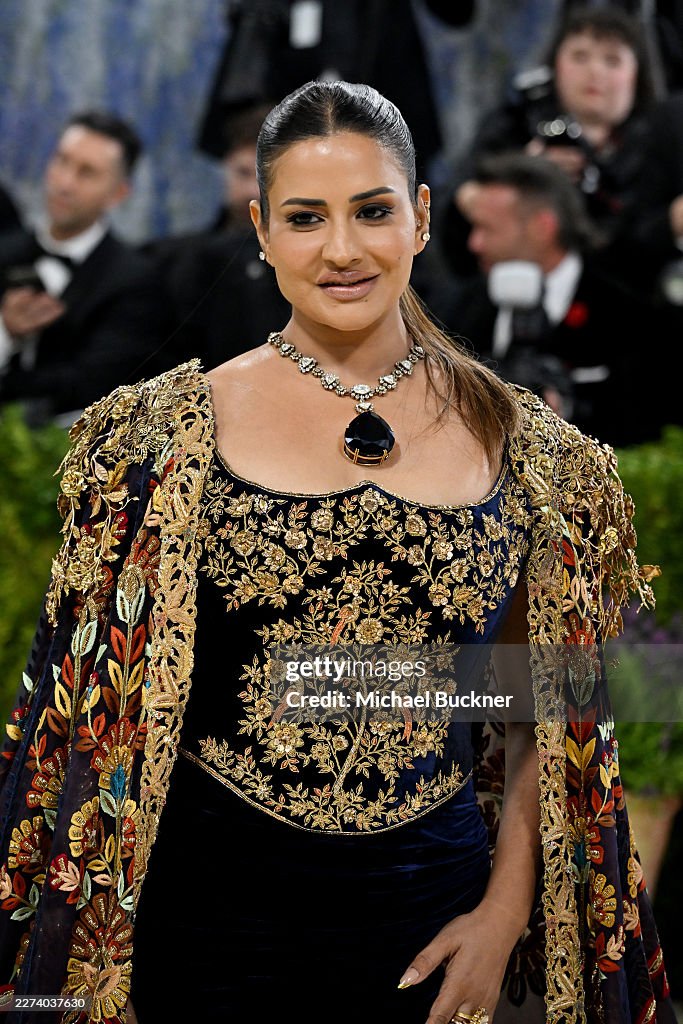
When Sudha Reddy, the Indian billionaire philanthropist, arrived at the 2026 Met Gala, the spectacle was undeniable: a gown that took over 3,459 hours of hand embroidery, crafted by more than 90 artisans, shimmering under the lights. But the pièce de résistance was Reddy’s jewelry centerpiece, anchored by the “Queen of Merelani,” a 550-carat tanzanite in a deep, shifting shade of violet-blue, surrounded by rose-cut diamonds in delicate floral clusters, and set in a Victorian-setting. Not just rare, but singular. The kind of stone that, from a design perspective, dictates everything around it. What made the moment endure wasn’t simply the rarity of the stone, but the clarity of intent behind it.
The Victorian setting is not incidental. The 19th century was the era when colonialism moved African gemstones and minerals into European display cases and crown jewels. For Reddy, an Indian woman from Hyderabad, wearing a gown whose textile traditions also circulated through colonial trade routes, to choose a Victorian frame for a stone from Tanzania is to acknowledge that history while reclaiming its beauty.
Reddy completed the look with a 23-carat yellow diamond ring and a 30-carat rose-cut polki diamond ring. Exceptional pieces in their own right, but the tanzanite was the focal point.
Historically, stones like this have followed a singular path—extracted, exported, and absorbed into narratives that rarely acknowledge where they began. What we saw here felt more intentional. In a room designed for maximal impact, this was a study in precision.
And that is where true luxury sits today, not in excess, but in intention.
On a night that asked fashion to function as art, this piece certainly held its ground.
“Hyderabad is my foundation, and this ensemble is a translation of that cultural identity into a language that is both global and deeply personal.”